

IMPACT Newsletter, Spring 2026
Greetings from the Chair
Dear Food Science Colleagues, Alumni, and Friends,
Each day that passes here, I note the warming weather, lengthening daylight hours and some anxious students that are all indications of another academic year. As we reflect on the achievements and challenges of the past year, I hold both optimism and a sense of realism about the path ahead for our department. Despite facing funding opportunities, notable with recent developments affecting nearly every granting agency, our department preserves with resilience and dedication.
Our faculty and staff have continued to excel in research, teaching, and outreach programming with impactful outcomes on each front. From groundbreaking studies on processing technologies to innovate community outreach programs, our commitment to advancing food science remains strong.
In the face of financial challenges, we have also found opportunities for growth and collaboration paving the way for new avenues to funding our research engine and continuing support of impactful instruction. These collaborations, notably our developing merger with the Nutritional Sciences department, not only to stabilize our research capabilities but also enrich our educational programs, providing students with novel opportunities to learn and grow.
Looking forward, we acknoeledge the realities of navigating funding turmoil and growing budgetary constraints, but we are confident in our ability to adapt and thrive. Together, we will continue to foster a supportive environment where excellence flourishes, ensuring that our department remains at the forefront of nutrition discovery and instruction.
Thank you for your continued dedication and commitment to our shared mission. With your continued support, I am confident that we will overcome the current challenges and achieve even greater successes in the future. Please stay in touch and enjoy the content of this newsletter.
Warm regards,
Scott Rankin
Professor and Chair of Food Science
Table of Contents
Community
Why does chocolate turn white? It’s not mold
A few years ago, a small bakery had a problem. A day or so after baking chocolate chip cookies, the chocolate chips would develop a unpleasant white film.
Confused, the bakery owner contacted Richard Hartel, professor of food science at the University of Wisconsin, looking for an explanation.
Hartel studies foods like chocolate and ice cream, and receives questions like this constantly, says . So what was going on with those chocolate chips?
Chocolate can appear uniform and solid to the naked eye but if we looked at it under a microscope we would see that it is actually a particle mixture of cocoa, sugar crystals and (in milk chocolate) milk powder, all held together by cocoa butter.
Sometimes, some of these ingredients move and this is what makes the chocolate white, or “efflorescent”. There are two main types of efflorescence in chocolate: sugar efflorescence and fat efflorescence.
When we take a cold chocolate bar out of the refrigerator and leave it unwrapped on the counter, water from warmer air surrounding can condense on the cold surface of chocolate, like condensation on a cold window pane.
This humidity dissolves part of the sugar on the surface of chocolate. When the water evaporates, the sugar is left behind in the form of tiny crystals creating a white, powdery coating.
This is called sugar efflorescence. Chocolate is still good to eat, it’s just not very pretty.
To avoid this, Hartel says that “the chocolate must be well wrapped to be stored in the refrigerator or freezer, and then allowed to warm to room temperature before unwrapping”, which prevents condensation from forming on the chocolate.
Chocolate can also turn white even when not stored in the refrigerator. “Imagine that leaves a chocolate bar in the car on a hot summer day,” says Hartel. “Once it cools, it often develops a dull, white coating.” This dull white covering is called fat efflorescence and it happens when the cocoa butter inside chocolate slowly changes shape.
Cocoa butter is made up of fat molecules that can be organized into six different crystal forms which chemists call “polymorphous“.
The chocolate makers want a special form, the so-called Form V, because it gives the chocolate that special shiny appearance and that texture that melts on the tongue. They create this shape by carefully heating and cooling the chocolate in a process called temperagem.
But over time, especially in hot locations like a sunny windowsill or a hot car, Form V can transform in a more stable form called Form VI. These larger crystals scatter light rather than reflecting it, making the chocolate appear dull and white.
Hartel explains that fat efflorescence “can form in chocolate practically any temperature although it generally slows down as the temperature drops.” This is why chocolate brands recommend storing chocolate in a fresh atmosphere.
Some chocolates are more susceptible to fat efflorescence than others.
In a 2008 study, scientists from Canada and Sweden observed chocolate under a microscope. The study authors found that chocolate with a microscopically rough surface was more likely to form fat efflorescence. All those little cracks create more places for fat crystals to grow.
Filled chocolates such as those with peanut butter centers, are even more likely to erupt. The liquid fat from the filling can move into the chocolate shell, speeding up the process and making the chocolate soft and sticky.
In conclusion… if your chocolate has suddenly turned white, there is no reason to worry.
Wild blueberries: New review explored benefits for heart, metabolism and the microbiome
A new scientific review summarizes the growing body of research on wild blueberries and cardiometabolic health, which includes factors like blood vessel function, blood pressure, blood lipids (cholesterol and triglycerides) and blood sugar (glucose).
The review was published in Critical Reviews in Food Science and Nutrition and developed from an expert symposium hosted by the Wild Blueberry Association of North America (WBANA) in Bar Harbor, Maine. Twelve experts, including food science professor Bradley Bolling, participated in the symposium from the fields of nutrition, food science, dietetics, nutrition metabolism and physiology, cardiovascular and cognitive function and health, gut health and microbiology, and preclinical and clinical models.
The paper summarizes 12 human clinical trials on the cardiometabolic effects of wild blueberries spanning 24 years and four countries, as well as dozens of other clinical, translational, and mechanistic studies on wild blueberries, cultivated blueberries, and cardiometabolic outcomes.
The authors report that findings are most consistent for vascular function, while results for blood pressure, blood lipids and glycemic control are promising but underscore the need for larger, well-controlled clinical research studies.
The paper also explores related health outcomes impacted by overall cardiometabolic wellness, such as gut health and cognitive function.
Seminar Speaker
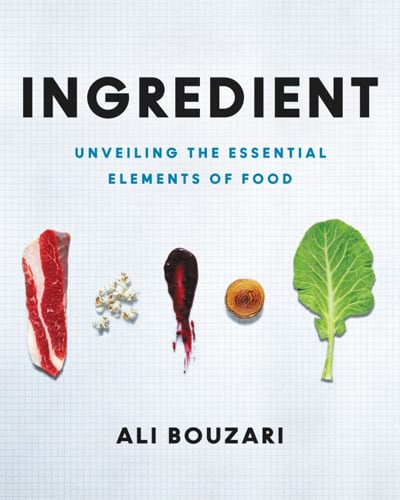
On March 2nd, the Food Science Graduate program hosted guest speaker, Ali Bouzari. Bouzari, a culinary scientist, author and educator with a Ph.D. in Food Biochemistry. He is a co-founder of Pilot R&D, a company leveraging food scientists to optimize food products.

Celebration
2026 CALS Academic Staff Excellence Award
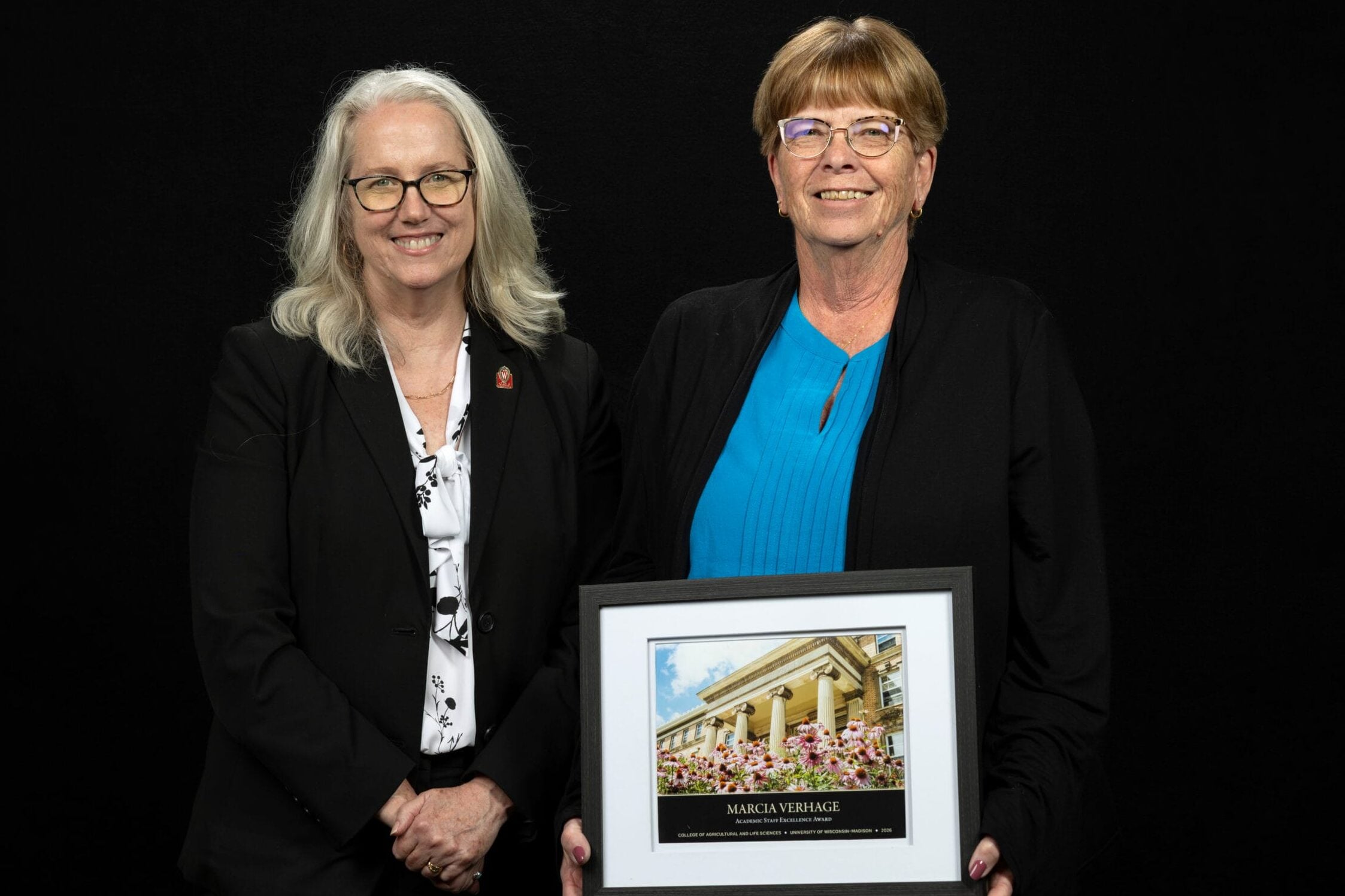
Photo by Michael P. King/UW–Madison CALS
Congratulations to Food & Nutritional Sciences Department Administrator, Marcia Verhage as one of the recipients of the 2026 Academic Staff Excellence Award! Marcia has been a part of the unviersity community for many years. For the past 16 years, she has served as Department Administrator for the Department of Food Science and the Food Research Institute, and two years ago she also began supporting the Department of Nutritional Sciences.
Her hardwork and dedication to both departments have made a lasting impact as she consistently goes above and beyond to support each department, strengthen collaboration, and create a welcoming and supportive environment for students, faculty, and staff.
Successful Defense!
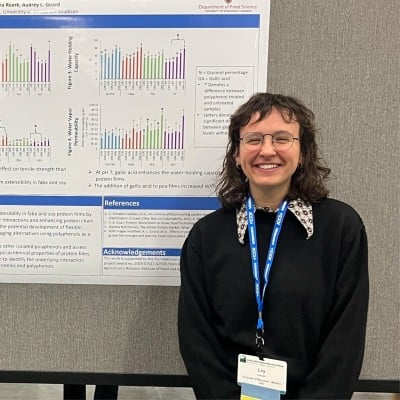
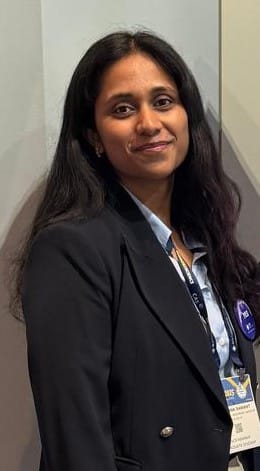
Congratulations to graduate students Xingrui Fan, Lily Lincoln, and Sanjana Sawant for successfully passing their prelims and Jason Pronschinske for successfully defending their thesis! The Department of Food Science wishes these students the best in their next endeavors, and we are proud to see how much they have grown over the years.


Virginia Dare Award Winner
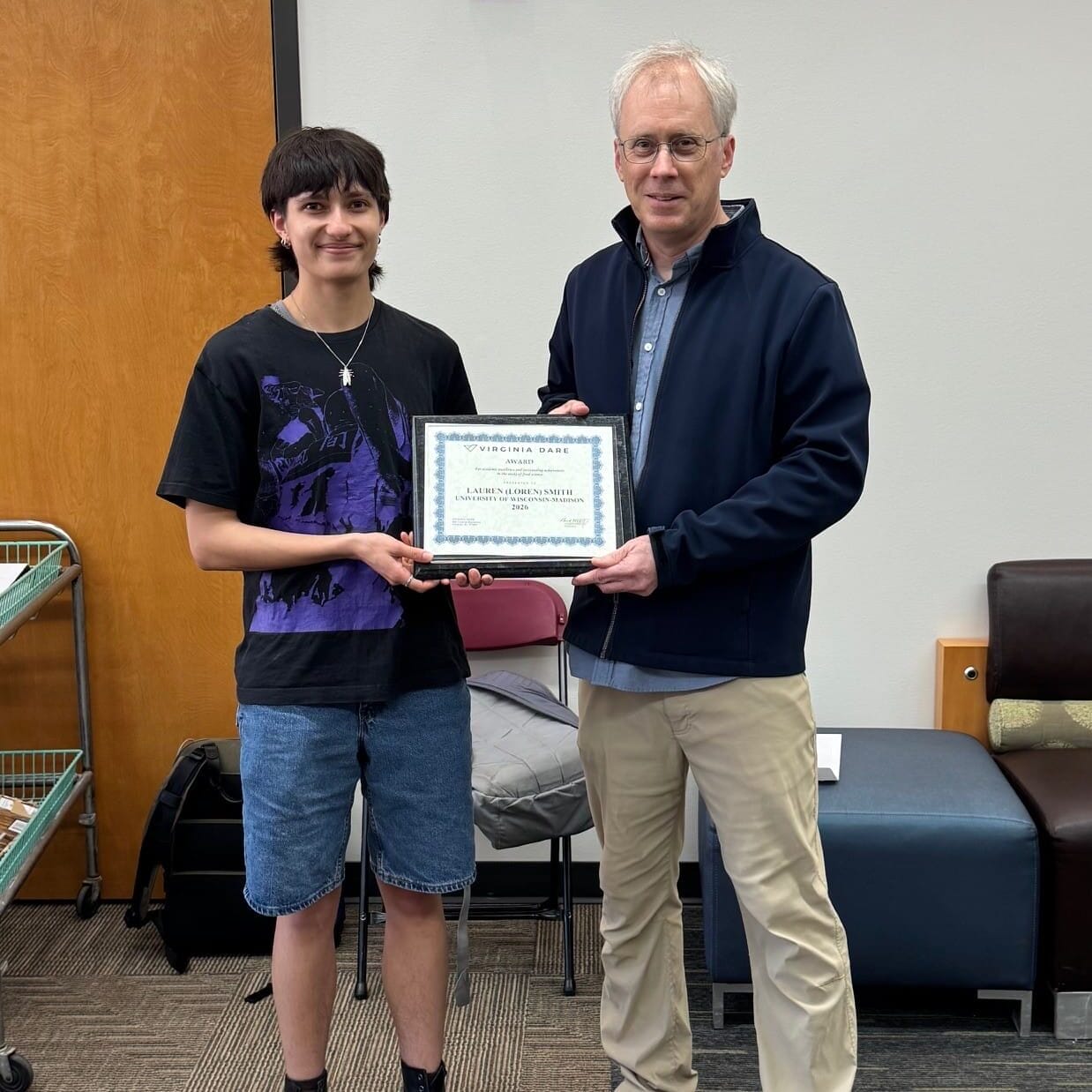
The Virginia Dare Award has annually awarded financial stipends to college students in recognition of academic achievement. The award selection criteria requires that student be an undergraduate student in good academic standing in food science. By means of coursework, academic projects, research, internships, part time or summer employment in the food industry. We are proud to announce that Loren Smith was this years recipient of the Virginia Dare Award.
Doug Hyslop Award Winner
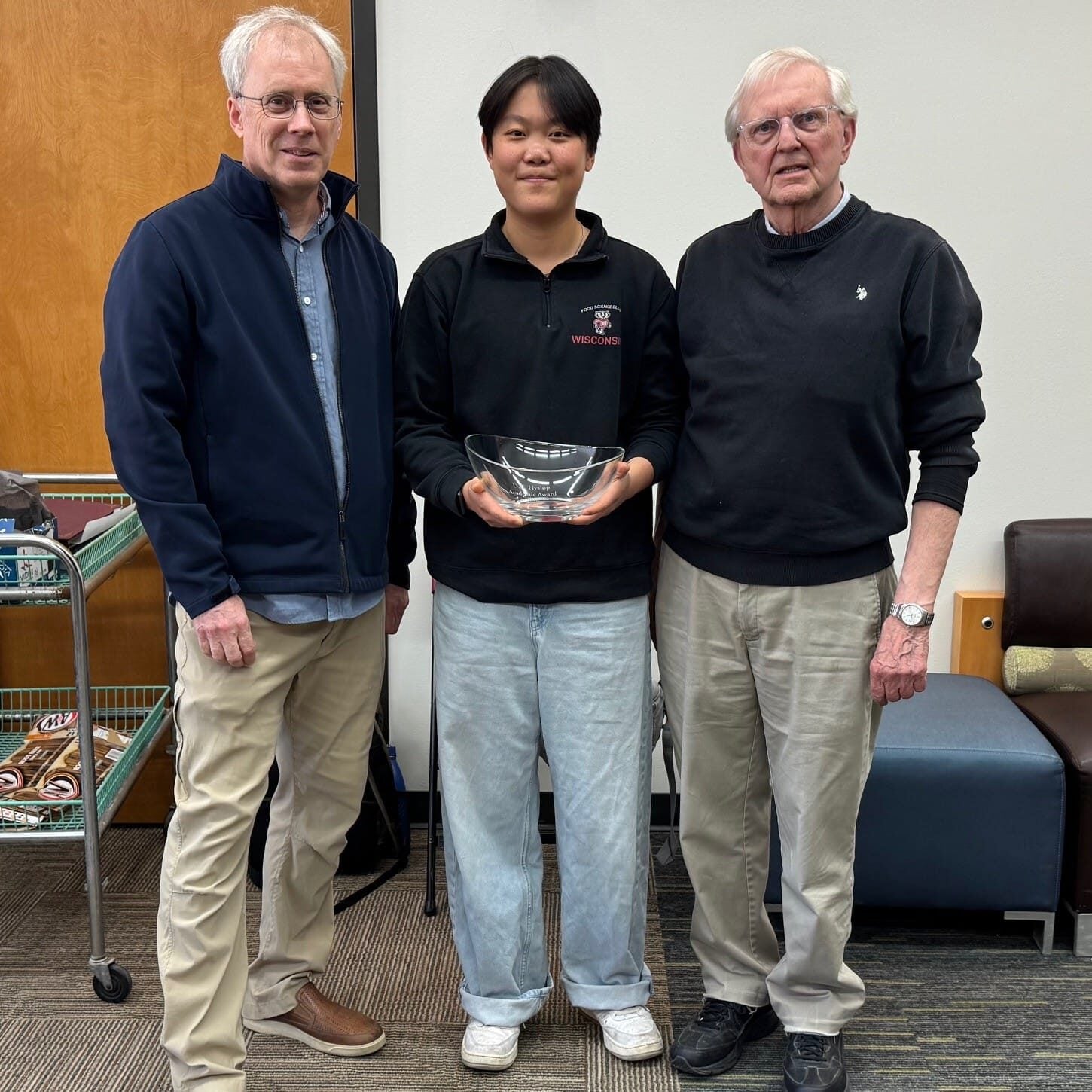
The Doug Hyslop Award winner this year is Wendy Lu. Wendy is a senior in the food science program, and have demonstrated intellectual curiosity, desire, and ability to pursue intellectual excellence. Congratulations Wendy!
The Department of Food and Nutritional Sciences
Coming July 2026
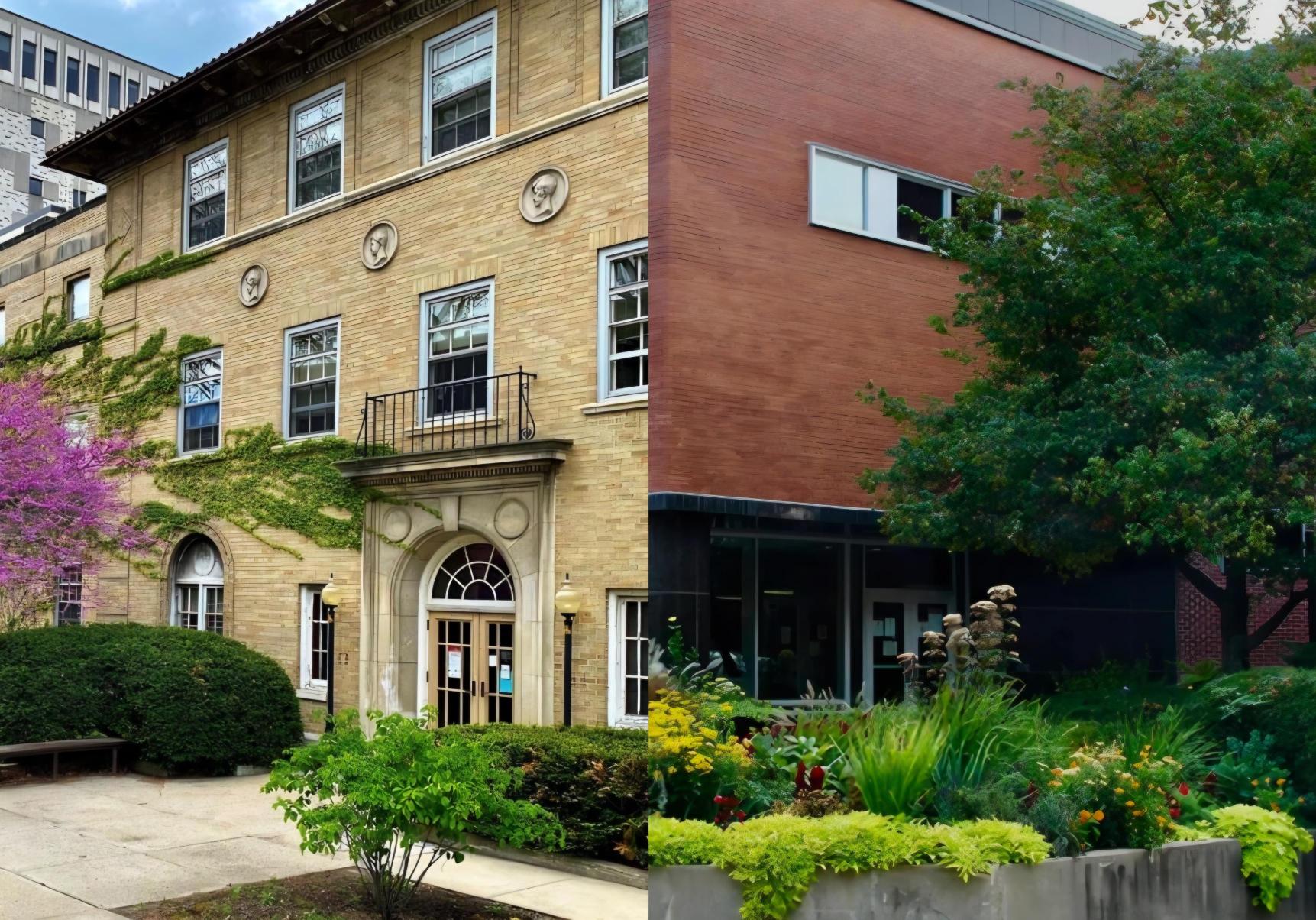
The newly established Department of Food and Nutritional Sciences is poised to address challenges at the intersection of food, nutrition, sustainability, and human health through pioneering research, education, service, and outreach.
Named Food Research Institute Director
J.P. van Pijkeren, professor in the Department of Food Science, has been named the faculty director of the Food Research Institute at the University of Wisconsin–Madison. He started the position on March 1.
The Food Research Institute (FRI), which was established at the University of Chicago in 1946 and moved to UW–Madison in 1966, is a leader in identifying and resolving food safety issues to meet community, government and industry needs. The mission of the institute is to catalyze multidisciplinary and collaborative research on microbial foodborne pathogens and toxins and to provide training, outreach, and service to enhance the safety of the food supply.
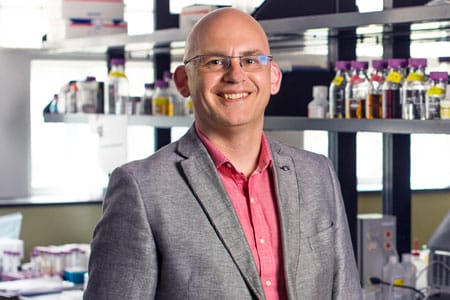
Van Pijkeren joined the UW–Madison faculty in 2013 as an assistant professor and has since been affiliated with FRI. His research program focuses on unraveling mechanisms by which probiotic bacteria interact with and thrive within the host, knowledge that his group leverages toward the development of next-generation probiotics.
In the role of FRI director, van Pijkeren is responsible for providing leadership and vision for FRI, developing and maintaining connections with industry sponsors and government representatives, and growing funding for FRI programs and activities.
“J.P.’s energy and scientific expertise at the nexus of food science and microbial systems position him well to guide FRI into its next chapter,” says Troy Runge, CALS associate dean for research and extension. “He follows Chuck Kaspar, whose steady leadership served FRI well, and I’m confident J.P. will continue that strong trajectory.”
Much of van Pijkeren’s research centers on Limosilactobacillus reuteri, until recently known as Lactobacillus reuteri. L. reuteri is an important gut symbiont, and select strains have demonstrated health-promoting, i.e., probiotic, properties. Over the years, the van Pijkeren lab has invested in developing genetic tools for use in L. reuteri and other lactic acid bacteria. These tools allow the lab to unravel the molecular interactions between probiotic bacteria and vertebrate host, understand the interplay between diet and probiotics and develop probiotic bacteria as therapeutic delivery vehicles.
The FRI director position was previously held for nearly five years by Chuck Kaspar, professor in the Department of Bacteriology, who recently stepped down and plans to remain involved in the institute.